



• 8/20/25 11:02 pm
- 517 views • 1 today
- save_alt 114 downloads • 1 today
- Progress
- 100% complete


27
The BMP-3 ( Russian : BMP-3 ) is a Russian infantry fighting vehicle designed in the early 1990s and introduced in the mid-1990s. It entered service in 1991 and was first shown publicly at a 1990 military weapons exhibition. It is the third and so far final version of the successful Russian BMP ( Russian : Боевая Машина Пехоты ; Boyevaya Mashina Pejoty , literally meaning "Infantry Fighting Vehicle") series of vehicles. It was intended to replace the BMP-2 , but has so far failed to do so; it only operates in elite and special forces of the Russian Army.
In addition to Russia , it is in service in 8 other countries, with the United Arab Emirates being the largest operator of the vehicle after the manufacturer, and the most recent and now most numerous is Venezuela , who has acquired 300 units. Unlike its predecessors, it has a completely new design; the steel chassis has been replaced by an aluminum one, the 100 mm main gun combines power and precision (qualities that were separate in the two previous BMPs), the new, more powerful engine is located at the rear and not the front, and it also incorporates state-of-the-art active and passive defense systems, which were included based on the experiences gained in campaigns such as Afghanistan or the most recent one in Chechnya.
The BMP-3's purpose is ambivalent, as it is theoretically an ICV whose role is to transport troops to the battlefield , but its greater firepower relative to other vehicles makes it closer to a light tank. Currently, there is a tendency within armies to use this type of vehicle in the reconnaissance role given the high cost of developing a dedicated light tank. The BMP-3, like light tanks due to its poor armor, is designed to operate in groups where heavier tanks can penetrate enemy defense lines, then take advantage of its mobility and firepower. The Russians have released a new version of the BMP designated BMP-T , which assigns it an exclusive fire support role since it does not offer transport capacity and is also more specialized in urban combat.
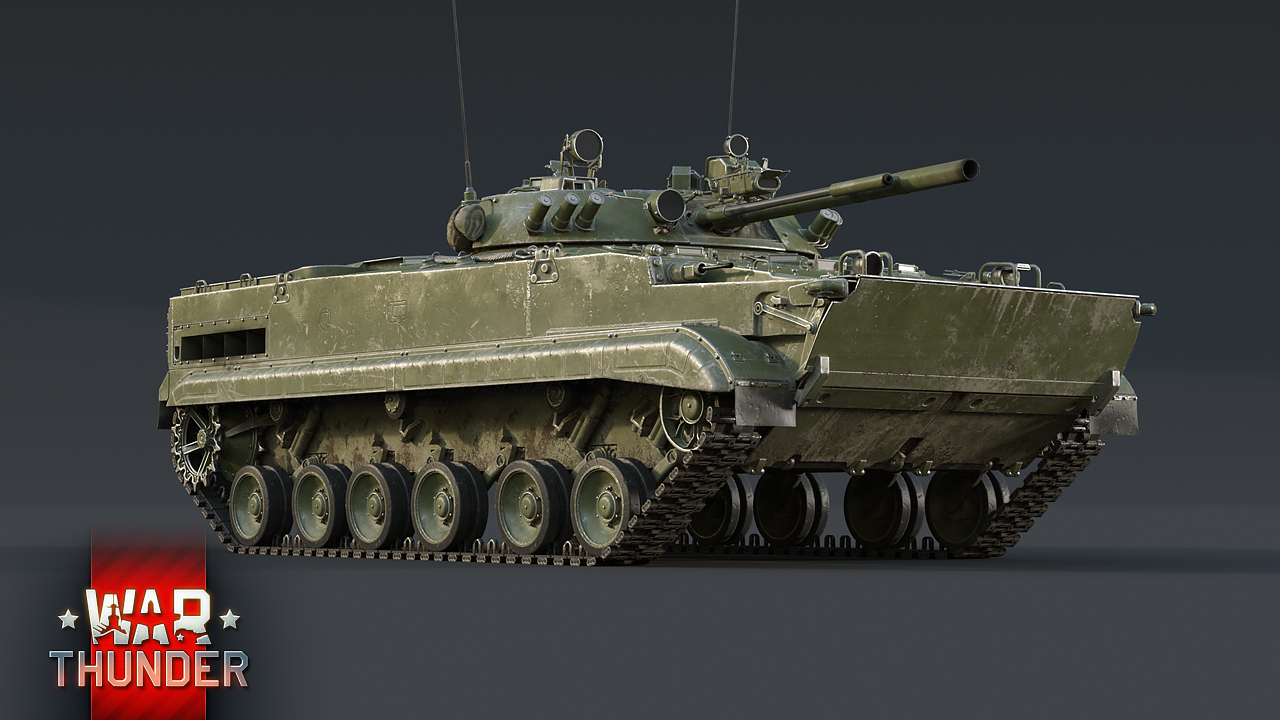
In addition to Russia , it is in service in 8 other countries, with the United Arab Emirates being the largest operator of the vehicle after the manufacturer, and the most recent and now most numerous is Venezuela , who has acquired 300 units. Unlike its predecessors, it has a completely new design; the steel chassis has been replaced by an aluminum one, the 100 mm main gun combines power and precision (qualities that were separate in the two previous BMPs), the new, more powerful engine is located at the rear and not the front, and it also incorporates state-of-the-art active and passive defense systems, which were included based on the experiences gained in campaigns such as Afghanistan or the most recent one in Chechnya.
The BMP-3's purpose is ambivalent, as it is theoretically an ICV whose role is to transport troops to the battlefield , but its greater firepower relative to other vehicles makes it closer to a light tank. Currently, there is a tendency within armies to use this type of vehicle in the reconnaissance role given the high cost of developing a dedicated light tank. The BMP-3, like light tanks due to its poor armor, is designed to operate in groups where heavier tanks can penetrate enemy defense lines, then take advantage of its mobility and firepower. The Russians have released a new version of the BMP designated BMP-T , which assigns it an exclusive fire support role since it does not offer transport capacity and is also more specialized in urban combat.
More like this

 Excluded

 Nautica Corporation

 Revos
Revos6707548
2



 cadbane86140






 BlueDream710710
 EcoSMP

 HolyPlanet
 StarryWayWishes
Have something to say?