


• 8/21/24 1:41 pm
- 2.4k views • 2 today
- save_alt 241 downloads
- Progress
- 100% complete
Added CreditMossgrown (renders) and Epitaph (more renders… info

234
NOTE: THIS HAS BEEN MADE IN 1.21.x. LOADING IT IN OLDER VERSIONS WILL CHANGE THE SKULLS USED FOR DECORATION TO A DEFAULT STEVE HEAD!!!
Hello!
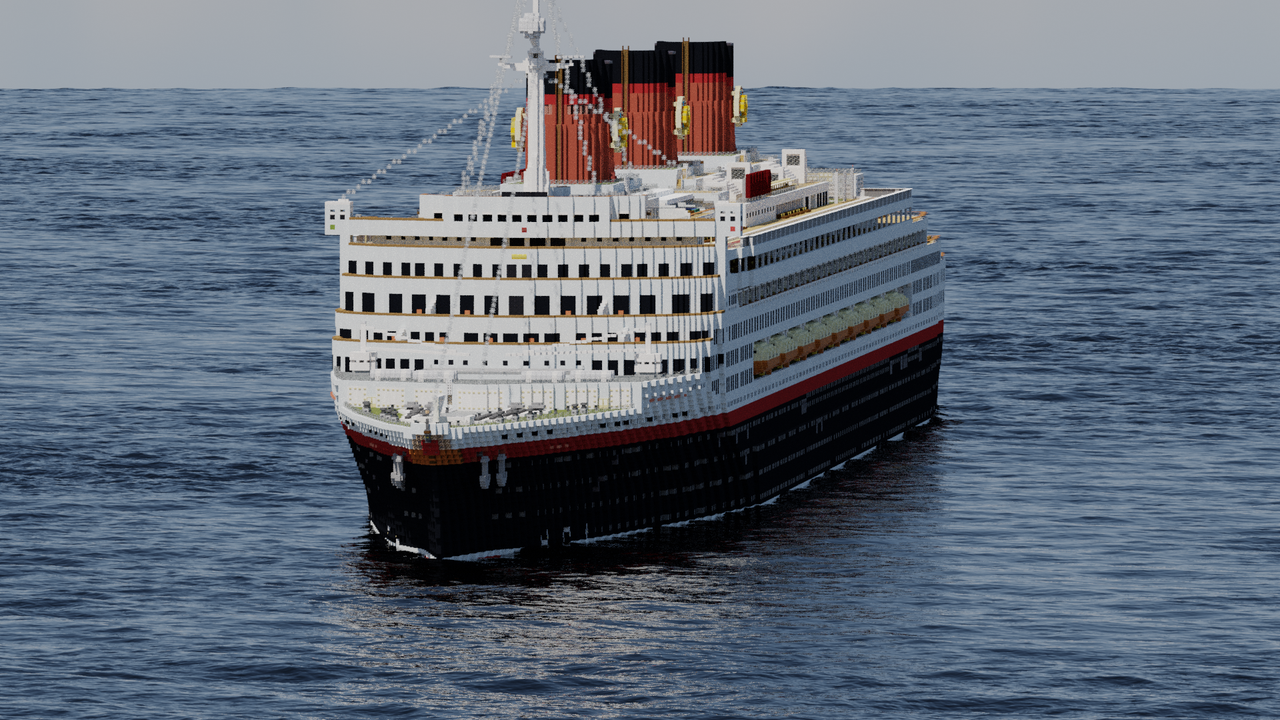
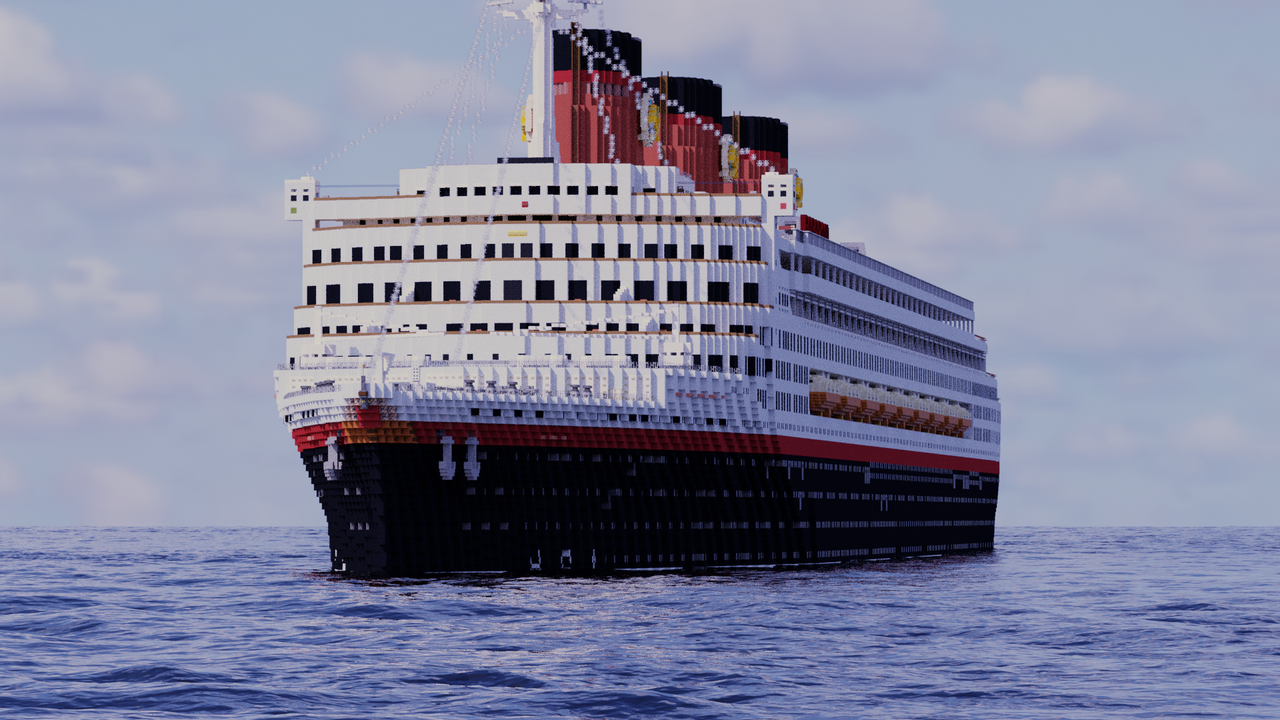
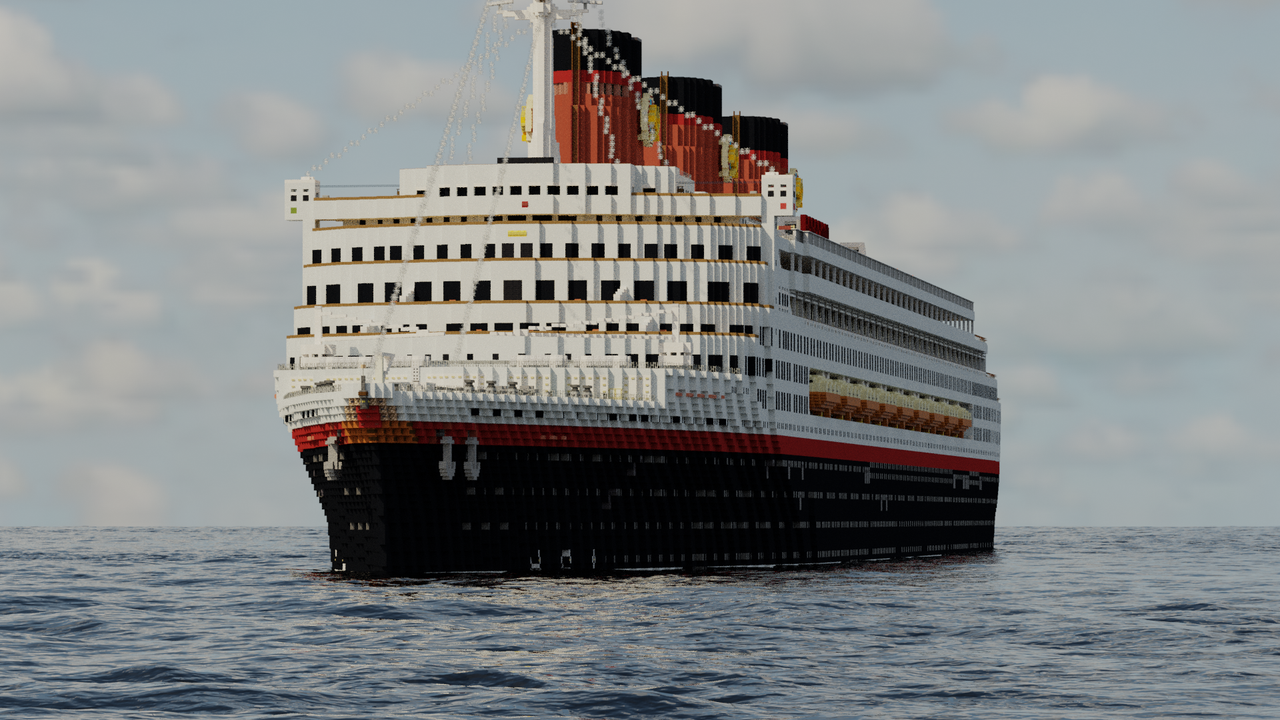
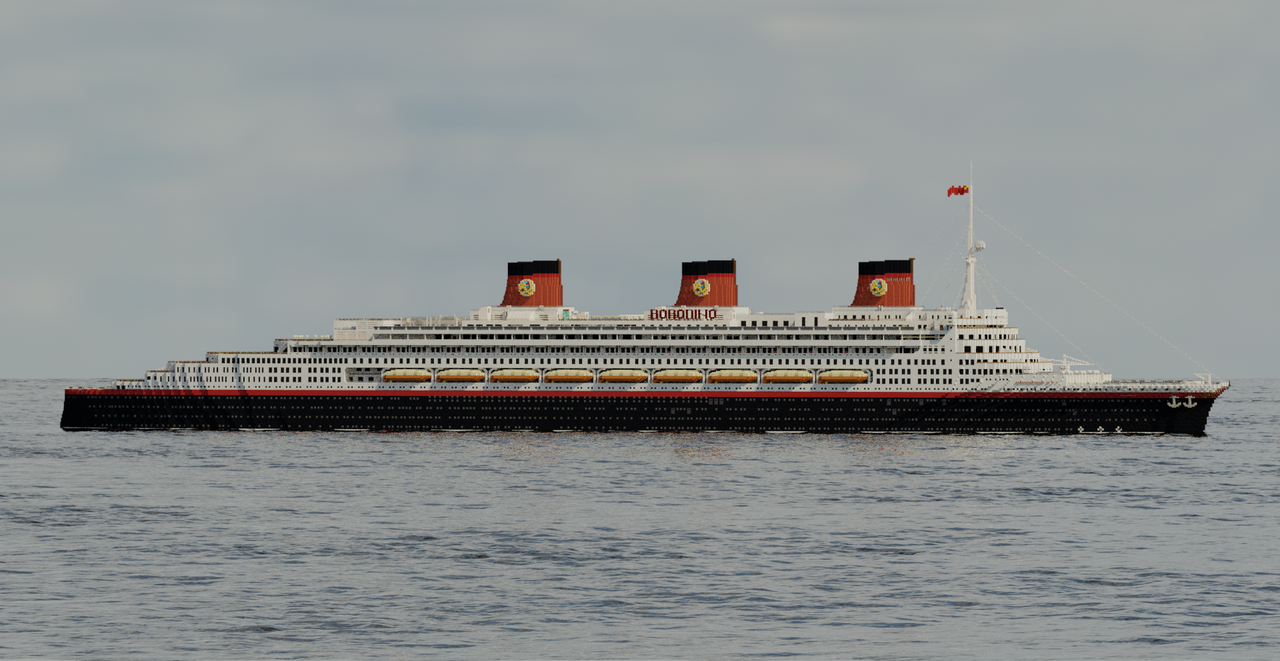
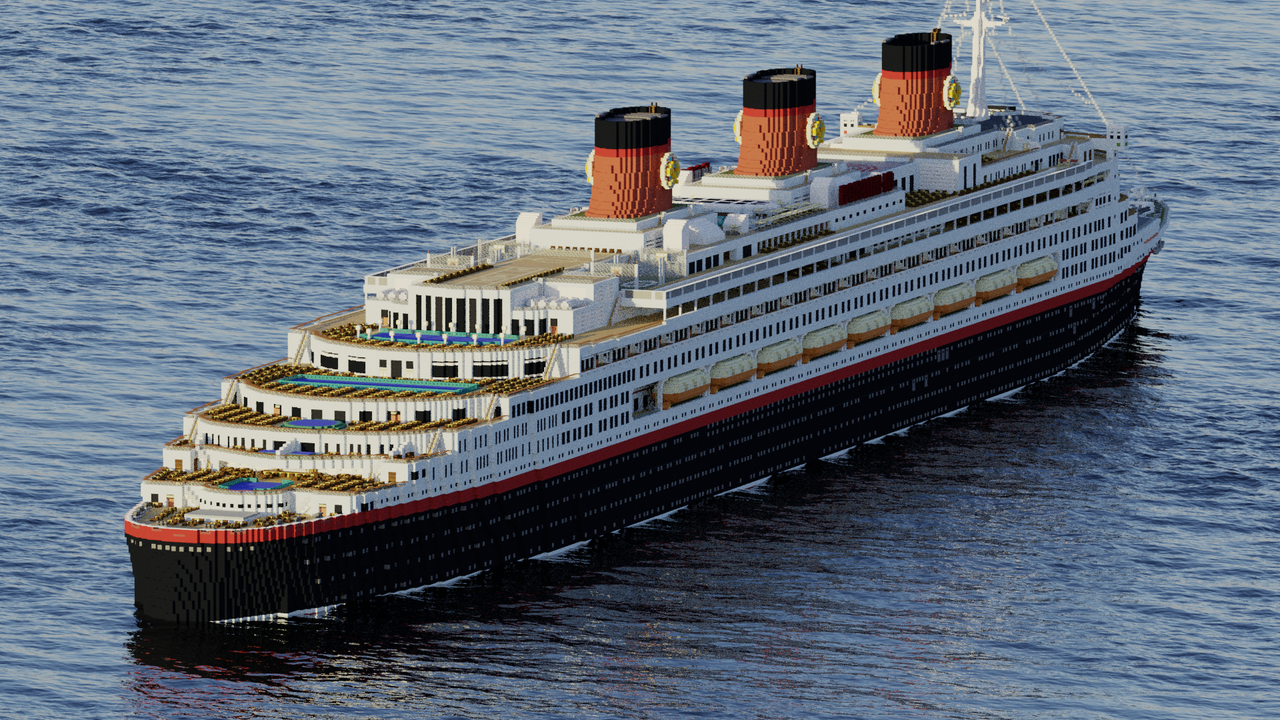
Today, I present to you the SS Borodino, named after the fierce and pivotal Battle of Borodino during the Napoleonic Wars—a name symbolizing resilience and strength.
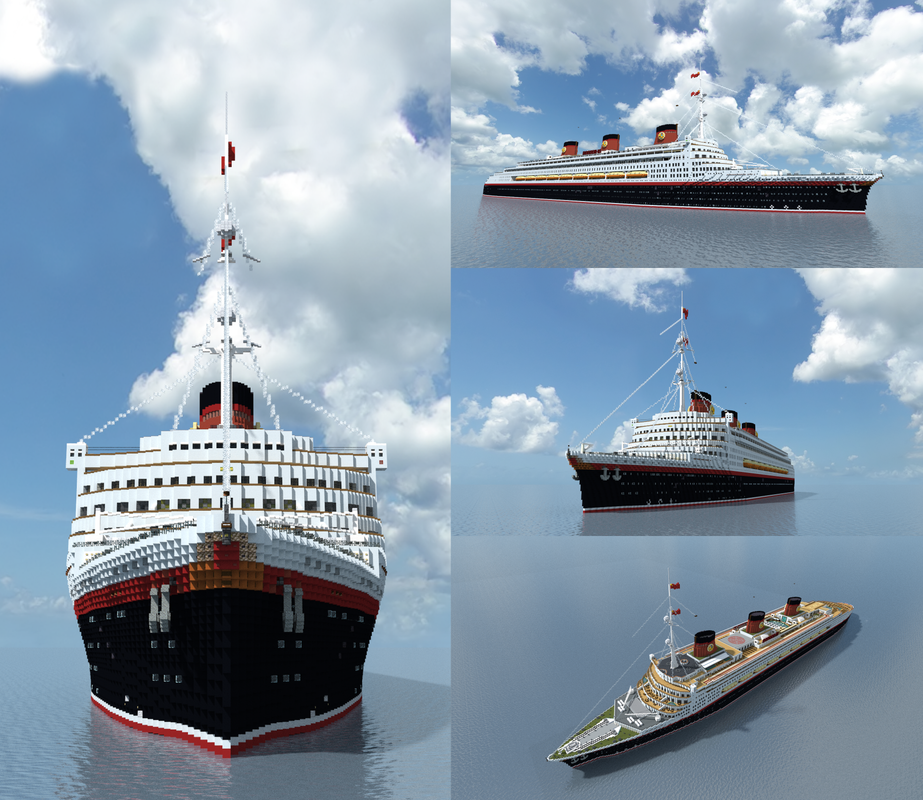
Renders have been made by Mossgrown and Epitaph. The postcards are exclusively made by Epitaph. Many thanks to both of you!
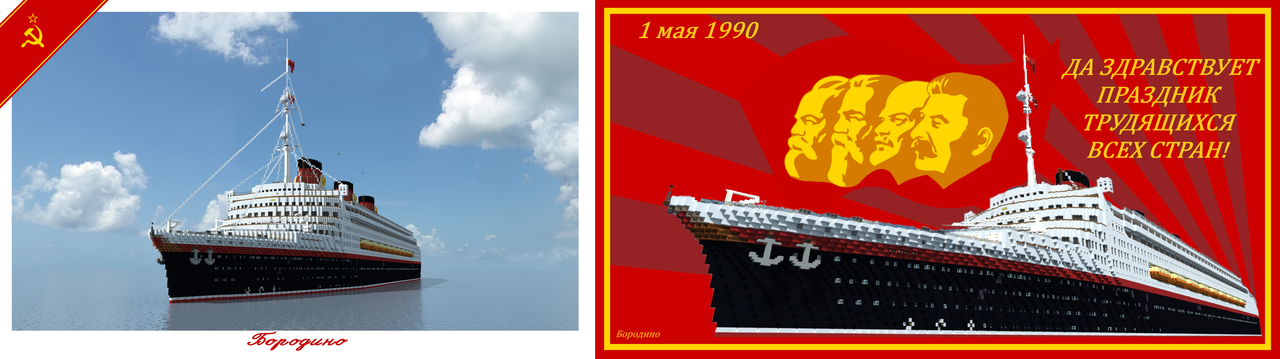
It's an alternative history project. The lore is as follows: Gorbachev's Perestroika reforms were successful and the USSR survived opening to the West intact. That provides an explanation as to why the ship doesn't feel as Soviet as it should; it is a lot more Westernised as it's designed to appeal to passengers from the Western bloc too.
This visionary project was conceptualized by the unified Soviet maritime authority, Gosmortransport USSR - the merger of former Baltic, Black Sea, etc. shipping companies, aiming to demonstrate the prowess of Soviet shipbuilding and to assert the USSR's capability on the global stage. Envisioned in the late 1980s as part of a grand Soviet initiative, the Borodino was designed to be the largest and most technologically advanced transatlantic liner of its time. With a length of 371 meters (longer than the real-life Icon of the Seas) and a planned speed exceeding contemporary ships, it was set to redefine maritime travel during the Cold War era.
Its construction began in the early 1990s amidst the global changes following the successful Perestroika reforms. Despite the dissolution of similar grand projects worldwide, Borodino's keel was laid down, symbolizing the enduring ambition of a revitalized Soviet Union. The ship was completed and launched, serving as a testament to what could have been achieved if history had taken a different path.
This creation remains a significant 'what-if' in the annals of maritime history, embodying the ultimate expression of Soviet engineering and aesthetic ideals—massive yet elegant, powerful yet graceful.
The design itself is something suitable for a large 90s Soviet ship, being large and somewhat modern, but also with the typical Soviet backwardness. It's a 90% copy of the Virtual Sailor liners Britannia and Milennia, both still available on the Virtual Sailor library. I spent hours copying the design from this very old video, the only one I could find that showed the original VS design extensively. Essentially, the differences between the original Britannia/Milennia and the Borodino are as follows: Britannia has two azimuth thrusters, a much bigger bulbous bow and a vastly different top deck and pool configuration, and very likely is diesel-powered. All of these simply did not make any sense - the decks were impossible to copy the way they were originally, the bulbous bow was far too large and since I turned it into a Soviet ship, the Soviets probably were not able to reverse-engineer azipods. Furthermore, the staple Soviet marine fuel was mazut (and still is in Russia), for which I had to switch it into a steamship.
Specifications:
Hello!
Today, I present to you the SS Borodino, named after the fierce and pivotal Battle of Borodino during the Napoleonic Wars—a name symbolizing resilience and strength.
Renders have been made by Mossgrown and Epitaph. The postcards are exclusively made by Epitaph. Many thanks to both of you!
It's an alternative history project. The lore is as follows: Gorbachev's Perestroika reforms were successful and the USSR survived opening to the West intact. That provides an explanation as to why the ship doesn't feel as Soviet as it should; it is a lot more Westernised as it's designed to appeal to passengers from the Western bloc too.
This visionary project was conceptualized by the unified Soviet maritime authority, Gosmortransport USSR - the merger of former Baltic, Black Sea, etc. shipping companies, aiming to demonstrate the prowess of Soviet shipbuilding and to assert the USSR's capability on the global stage. Envisioned in the late 1980s as part of a grand Soviet initiative, the Borodino was designed to be the largest and most technologically advanced transatlantic liner of its time. With a length of 371 meters (longer than the real-life Icon of the Seas) and a planned speed exceeding contemporary ships, it was set to redefine maritime travel during the Cold War era.
Its construction began in the early 1990s amidst the global changes following the successful Perestroika reforms. Despite the dissolution of similar grand projects worldwide, Borodino's keel was laid down, symbolizing the enduring ambition of a revitalized Soviet Union. The ship was completed and launched, serving as a testament to what could have been achieved if history had taken a different path.
This creation remains a significant 'what-if' in the annals of maritime history, embodying the ultimate expression of Soviet engineering and aesthetic ideals—massive yet elegant, powerful yet graceful.
The design itself is something suitable for a large 90s Soviet ship, being large and somewhat modern, but also with the typical Soviet backwardness. It's a 90% copy of the Virtual Sailor liners Britannia and Milennia, both still available on the Virtual Sailor library. I spent hours copying the design from this very old video, the only one I could find that showed the original VS design extensively. Essentially, the differences between the original Britannia/Milennia and the Borodino are as follows: Britannia has two azimuth thrusters, a much bigger bulbous bow and a vastly different top deck and pool configuration, and very likely is diesel-powered. All of these simply did not make any sense - the decks were impossible to copy the way they were originally, the bulbous bow was far too large and since I turned it into a Soviet ship, the Soviets probably were not able to reverse-engineer azipods. Furthermore, the staple Soviet marine fuel was mazut (and still is in Russia), for which I had to switch it into a steamship.
Specifications:
- Tonnage: 220,000 GRT
- Length: 371m / 1217ft (overall)
- Beam: 48m / 157ft
- Height: 72m / 236ft (keel to top of the funnels)
- Installed Power: Steam turbines producing 300,000 horsepower
- Propulsion: Triple propeller configuration, one central and two wing propellers
- Speed: 28 knots operational, about 32 knots maximum
- Capacity: 7500 people (5500 passengers in one class and 2000 crew)
- Decks: 15
More like this
 SS Shenandoah (Full Interior) 1.14.4Water Structure Map
 LenoreWQ
7/29/20 3:05
• posted 2/21/20 10:29
5.1k 413 13x 185933
LenoreWQ
7/29/20 3:05
• posted 2/21/20 10:29
5.1k 413 13x 185933


6387465
2


 User6713798G
 Mortality SMP
 aSimpleBaboon





 CronosDarth
 GARRETT2BY4

 Gerelion
 kioi
kioi
Have something to say?
best regards DSL
ENHORABUENA!!